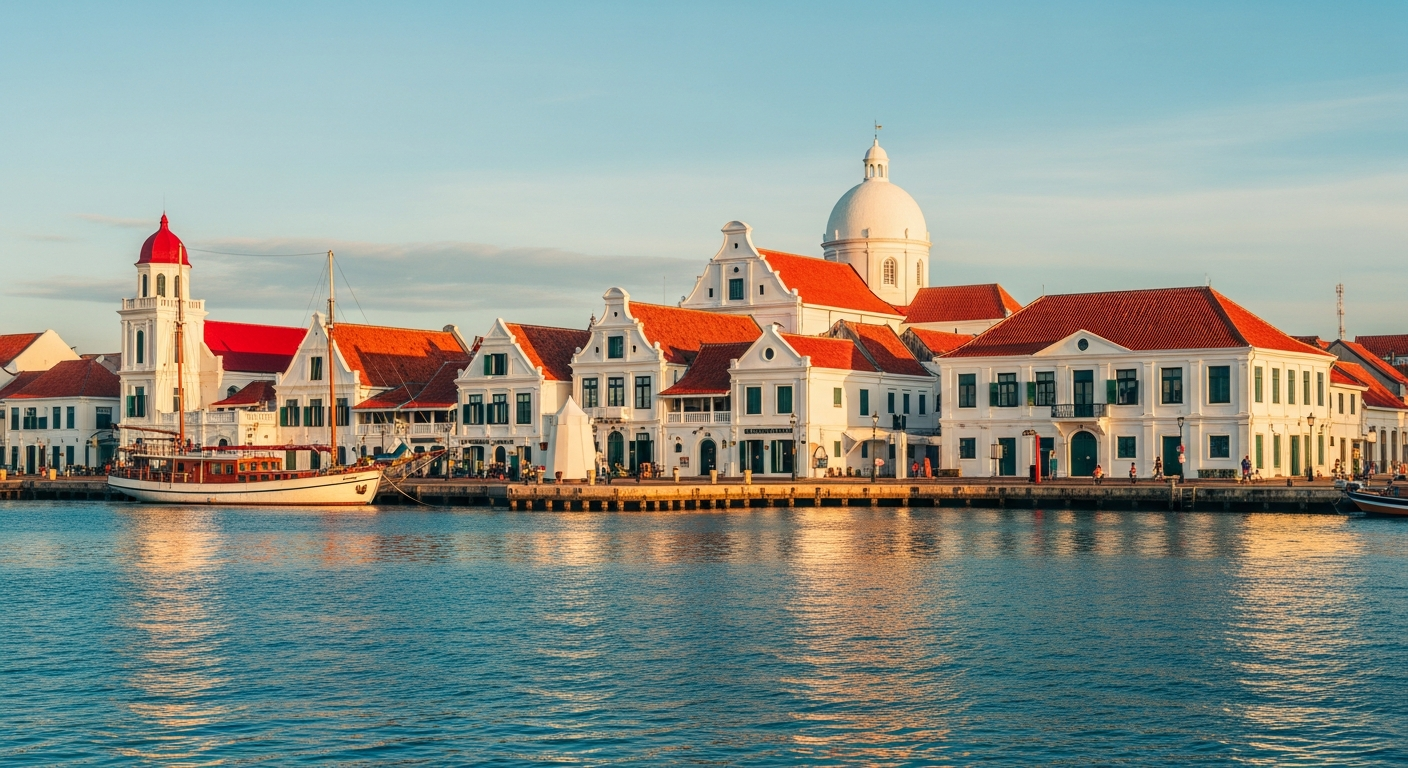
- Explore the origins of nutmeg and clove in Banda and the Lease Islands.
- Discover 17th-century forts and vibrant local cultures across multiple islands.
- Access pristine dive locations with high marine biodiversity, ideal for luxury liveaboard expeditions.
The air in Ambon carries the scent of distant history, a whisper of nutmeg and clove that defined empires. This is Maluku, the legendary Spice Islands, where every sunrise paints the sky over volcanic peaks and turquoise waters. A Maluku tour represents an invitation to a region where time folds, revealing layers of global trade, sultanate power, and natural splendor. This journey offers a distinct perspective for the discerning traveler, moving beyond conventional routes into an authentic narrative of discovery.
The Enduring Allure of Maluku: A Spice Trade Legacy
Maluku’s very name resonates with ancient power, its singular place in global history. For centuries, these islands were the exclusive source of nutmeg and clove, spices so valuable they once rivaled gold. The pursuit of these commodities reshaped world maps, fueled colonial ambitions, and left an indelible mark on the archipelago’s culture and architecture. The Banda Islands stand as the undisputed epicenter of this legacy. Here, the fragrant air still carries the essence of nutmeg, Myristica fragrans, a tree native only to this small cluster of islands. Historical records indicate that a pound of nutmeg was worth more than seven times its weight in silver in 16th-century Europe. The Dutch East India Company (VOC), established in 1602, aggressively sought to monopolize this trade, leading to the construction of formidable fortresses such as Fort Belgica on Banda Neira, completed in 1611. This star-shaped bastion, a UNESCO tentative heritage site, provides panoramic views of the harbor and the active Gunung Api volcano, which rises 656 meters from the sea. Understanding this history is crucial; it frames every visit to these islands. The local Banda people, descendants of the original inhabitants and later migrants, maintain a deep connection to this past, their livelihoods still intertwined with the spice plantations that blanket the hillsides. A typical nutmeg harvest season runs from May to October, offering a chance to observe the traditional processing methods firsthand. What makes Maluku historically significant? Its role as the sole origin of nutmeg and clove created the first globalized economy, driving exploration and conquest for over 200 years. The impact of the spice trade is visible in the unique blend of European colonial architecture and local traditions, a tangible link to a bygone era of immense wealth and strategic importance. The historical significance extends beyond trade; it encompasses the strategic military presence of various European powers, each vying for control. Fort Nassau, built in 1609, also on Banda Neira, stands as another testament to these struggles. A Maluku tour through these islands offers a direct engagement with primary sources of global economic history.
Ambon and the Lease Islands: Gateway to Eastern Indonesia
Ambon Island functions as the central gateway to the broader Maluku archipelago, a vibrant hub where historical layers meet contemporary island life. The city of Ambon, officially Ambon City, serves as the capital of Maluku province, with a population exceeding 350,000 residents as of 2020. Its strategic location made it a crucial port during the spice trade era, a legacy evident in its architecture and cultural fabric. Kota Tua, Ambon’s old town, presents a collection of colonial-era buildings, offering a glimpse into the Dutch administrative presence. Fort Victoria, originally built by the Portuguese in 1575 and later expanded by the Dutch in 1605, stands as one of the oldest operational forts in Indonesia. Its sturdy walls and cannons still overlook Ambon Bay, a natural deep-water harbor that has welcomed ships for centuries. Visitors often find the blend of faded colonial grandeur and bustling local markets particularly engaging. Approximately 80 kilometers east of Ambon lie the Lease Islands, a smaller group including Saparua, Haruku, and Nusa Laut. These islands, accessible by public ferry or private charter boat from Ambon (a journey typically taking 1-2 hours to Saparua), retain a more serene, untouched character. Saparua is known for Fort Duurstede, another well-preserved Dutch fortress constructed in 1676. This fort played a role in the Pattimura Rebellion of 1817, a significant anti-colonial uprising led by Thomas Matulessy, known as Kapitan Pattimura, a national hero of Indonesia. Haruku, with its traditional villages and clove plantations, offers a window into local community life, where ancient customs persist. Nusa Laut, the smallest of the three, is celebrated for its pristine beaches and calm waters, ideal for snorkeling and quiet contemplation. How do I access the Maluku Islands? Ambon’s Pattimura International Airport (AMQ) is the primary entry point, with direct flights from major Indonesian cities like Jakarta (approximately 3.5 hours) and Makassar. From Ambon, further travel to the Lease Islands or Banda is typically via fast boat or chartered vessel, ensuring comfortable transit for a luxury Maluku tour. The infrastructure caters to sophisticated logistics, enabling seamless connections for private jets or liveaboard transfers. Ambon also serves as a provisioning point for luxury yachts and dive liveaboards heading further east into Raja Ampat or south to the Banda Sea.
Ternate and Tidore: Sultanates of Volcanic Majesty
North Maluku presents a dramatic landscape dominated by active volcanoes and the enduring legacy of powerful sultanates. Ternate and Tidore, two rival islands separated by a narrow strait of just over 1.5 kilometers, once held sway over vast territories, controlling much of the global clove trade. Mount Gamalama, Ternate’s active stratovolcano, rises majestically to 1,715 meters, its slopes covered in dense jungle and clove plantations. On Tidore, Mount Kie Besi reaches 1,385 meters, equally commanding. These volcanic islands provided fertile ground for the clove tree, Syzygium aromaticum, making them incredibly valuable. The Sultanate of Ternate, established in the 13th century, was one of the most powerful Islamic kingdoms in the region. Its influence stretched across eastern Indonesia and parts of the Philippines. Fort Oranje, built by the Dutch in 1607, stands as the largest and most significant European fortress on Ternate, originally intended to secure the clove trade. Other fortifications like Fort Tolukko (Portuguese, 1512) and Fort Kalamata (Portuguese, 1540) dot the island, each telling a chapter of colonial rivalry. Tidore, the seat of the Sultanate of Tidore, was a formidable rival to Ternate. The Sultanate of Tidore maintained strong ties with Spain, contrasting with Ternate’s Portuguese and later Dutch allegiances. This rivalry is etched into the landscape and historical sites. The Kadato Kie, the palace of the Sultan of Tidore, rebuilt in 2010, offers insights into royal life and traditional governance. What are the main cultural attractions in Maluku? Beyond the forts, the living culture of the sultanates, including traditional dances, music, and the ceremonial aspects of royal life, remains a significant draw. The annual Legu Gam Festival in Ternate celebrates the Sultan’s birthday, showcasing local traditions and arts, typically held in April. Visitors can witness the intricate details of traditional boat building, known as kora-kora, which were once used in naval battles. These islands are not just historical relics; they are living museums where the descendants of sultans still hold ceremonial power, maintaining a unique cultural identity. The proximity of Halmahera, Indonesia’s largest island in the Maluku archipelago, offers further exploration opportunities, particularly for its remote natural beauty and diverse ecosystems. A Maluku tour to Ternate and Tidore is a journey into the heart of a proud, ancient kingdom, set against a backdrop of dramatic volcanic scenery.
Beneath the Surface: Maluku’s Marine Biodiversity
The waters surrounding Maluku are a diver’s dream, a vital component of the Coral Triangle, the global epicenter of marine biodiversity. This region boasts over 500 species of reef-building corals, more than 3,000 species of reef fish, and six of the world’s seven species of marine turtles. Unlike the more frequented dive sites, Maluku offers remote, pristine environments, ideal for discerning divers seeking untouched underwater landscapes. The Banda Sea, particularly around the Banda Islands, is renowned for its schooling hammerhead sharks, often sighted during the transitional seasons from September to November and March to May. Walls covered in vibrant soft corals, barrel sponges, and a profusion of macro life characterize the reef systems. The visibility often exceeds 30 meters, providing exceptional photographic opportunities. Further west, the waters off Seram Island, particularly around the Manusela National Park, offer diverse diving, from large pelagics to intricate muck diving sites. Seram’s northern coast features deep walls and pinnacles, while its southern bays provide sheltered conditions for macro photography. Is Maluku suitable for diving? Absolutely. Maluku caters to all levels, from novice snorkelers to advanced technical divers, with a particular appeal for luxury liveaboard guests transiting through the region. Many luxury liveaboards, often originating from or concluding journeys in Raja Ampat, utilize Maluku as a critical segment of their itineraries, offering access to these remote sites. Misool, at the southern tip of Raja Ampat and often considered a gateway from Maluku, provides a glimpse into the richness of these waters, with its iconic mushroom-shaped karst islands and extensive soft coral gardens. Average water temperatures range comfortably between 27°C and 30°C year-round, making for pleasant diving conditions. The region’s low population density and limited tourism infrastructure have preserved its marine ecosystems, presenting an authentic, uncrowded dive experience. Conservation efforts are ongoing, focusing on sustainable tourism practices to protect these invaluable natural assets. Dive operators often employ local guides, ensuring a deeper understanding of the marine environment and supporting community livelihoods. Expect encounters with reef sharks, manta rays, various species of tuna, and an astonishing array of nudibranchs and pygmy seahorses. A Maluku tour focused on marine exploration offers a privileged view into one of the planet’s most biologically rich underwater realms.
Planning Your Maluku Tour: Luxury Logistics and Tailored Journeys
A Maluku tour is designed for the discerning traveler, emphasizing bespoke experiences, seamless logistics, and comfort. This region, while historically significant and naturally abundant, requires careful planning to maximize its offerings, particularly for those accustomed to eco-luxury and UHNW travel standards. The primary mode of exploration for many luxury guests is a private liveaboard charter. These vessels, ranging from traditional Indonesian phinisis to modern motor yachts, offer access to remote islands and dive sites, combining opulent accommodations with personalized service. A typical luxury liveaboard journey through Maluku spans 7 to 14 nights, allowing for comprehensive exploration of multiple island groups, from Banda’s historical sites to the pristine reefs of the Lease Islands and Seram. What type of accommodation is available? While land-based luxury resorts are limited outside of Ambon, select boutique guesthouses on Banda Neira offer authentic charm and comfort. However, the true luxury experience in Maluku unfolds on the water. These charters come fully staffed with experienced crews, private chefs crafting gourmet Indonesian and international cuisine, and expert dive masters or cultural guides. Pricing for such bespoke charters varies significantly based on vessel size, duration, and level of luxury, typically starting from $5,000 per day for smaller, high-end phinisis. When is the best time to visit Maluku? The weather patterns in Maluku differ from western Indonesia. The best time for diving and island hopping in the Banda Sea (including Banda Islands, Ambon, Lease Islands, Seram) is generally from September to November and again from March to May, when seas are calmer and visibility is optimal. For North Maluku (Ternate, Tidore), the dry season from June to September offers stable weather. Our team specializes in crafting detailed itineraries, coordinating private jet transfers to Ambon, helicopter services for inter-island hops, and exclusive access to historical sites. We understand the nuances of travel in remote Indonesia, ensuring every detail, from preferred dietary requirements to specific dive preferences, is meticulously handled. Comparisons to more mainstream destinations highlight Maluku’s distinct advantage: authenticity and exclusivity. Unlike the crowded dive sites of some popular regions, Maluku offers solitude and a genuine connection to nature and history. Our Maluku tour planning ensures privacy and an intimate encounter with this extraordinary archipelago. We also facilitate the necessary permits for marine park access and cultural site visits, streamlining the entire journey for a truly effortless experience. This is an exploration, not merely a vacation, tailored to your exact specifications.
A Maluku tour offers more than just a destination; it presents a narrative. It is a journey through the annals of global history, a discovery of vibrant cultures, and an immersion in some of the world’s most biodiverse marine environments. From the fragrant nutmeg groves of Banda to the volcanic strongholds of Ternate and the kaleidoscopic reefs of the Coral Triangle, Maluku captivates the imagination. We invite you to explore the possibilities of a tailor-made Maluku tour. Connect with our luxury travel specialists today to begin designing your bespoke itinerary and uncover the profound beauty of Indonesia’s Spice Islands. Visit our homepage for more information on our exclusive Maluku offerings, or read our guide to luxury liveaboards in Maluku to find the perfect vessel for your adventure.